
Choosing the best recovery gummy with DHM: a buyer's guide
Table of Contents
- Key Takeaways
- Why DHM matters in recovery gummies
- How to assess DHM dosage and supplement quality
- Key ingredients that supercharge recovery gummies
- How to balance price, brand reputation, and real results
- The real secret: tailoring DHM gummies to your lifestyle
- Explore science-backed recovery with BioEssentials
TL;DR:
- Choose recovery gummies with transparent DHM dosing and third-party testing to ensure quality.
- Support recovery with ingredients like L-Cysteine, Milk Thistle, B-Vitamins, and electrolytes.
- Tailor supplement choice to your lifestyle and drinking habits for optimal results.
Grabbing any recovery gummy from the shelf and hoping for the best is a gamble most health-conscious adults can’t afford to take. The market is flooded with products making bold claims, yet the differences in DHM dosage, supporting ingredients, and quality credentials can be enormous. Your body deserves better than a poorly dosed, untested formula. This guide walks you through a five-point buyer’s checklist so you can cut through the noise, compare products with confidence, and choose a recovery gummy that genuinely supports your wellbeing, not just one that looks good on the packaging.
Key Takeaways
| Point | Details |
|---|---|
| Evidence-based dosing | Choose gummies with 300-600mg DHM per serving for optimal effect and safety. |
| Synergy matters | Selecting products with additional proven ingredients such as L-Cysteine and Milk Thistle provides better, broader recovery support. |
| Verify quality | Always check for third-party testing, GMP certification, and clear labelling for full confidence in supplement safety. |
| Brand reputation | Trust established brands with strong reviews and certifications to avoid ineffective or unsafe products. |
| Personalise your choice | Factor in your needs and lifestyle for the best value—top brands offer both minimalist and multi-ingredient recovery options. |
Why DHM matters in recovery gummies
Dihydromyricetin, better known as DHM, is a naturally occurring flavonoid extracted from the Japanese raisin tree (Hovenia dulcis). It has been used in traditional East Asian medicine for centuries, but modern science is now catching up with what those cultures understood intuitively: this compound has a meaningful effect on how the body processes alcohol.
The science behind DHM is genuinely interesting. It works on multiple fronts simultaneously. First, it enhances the activity of two key enzymes, alcohol dehydrogenase (ADH) and aldehyde dehydrogenase (ALDH), which are responsible for breaking down alcohol and the metabolic byproduct acetaldehyde. Acetaldehyde is largely responsible for the headaches, nausea, and fatigue associated with a night out. Second, DHM appears to support GABA receptor balance in the brain, which may reduce the rebound anxiety and sleep disruption that often follow alcohol consumption. Third, it acts as an antioxidant, helping to neutralise free radicals generated during alcohol metabolism.
As ConsumerLab notes, DHM enhances ADH/ALDH enzymes, reduces acetaldehyde toxicity, supports GABA balance, and provides antioxidant activity, with promising preclinical data but limited human trials to date. That distinction matters. Animal studies, including notable research from the University of Southern California, are compelling. Human trials are still catching up. This doesn’t mean DHM is ineffective; it means you should approach marketing claims with measured expectations.
“The most honest thing a recovery supplement brand can say is: the preclinical evidence is strong, human data is growing, and the safety profile looks good. That’s a reasonable basis for use.”
Here is a quick summary of what DHM does in the body:
| Mechanism | Effect on recovery |
|---|---|
| Enhances ADH/ALDH enzymes | Faster alcohol breakdown |
| Reduces acetaldehyde build-up | Less nausea and headache |
| Supports GABA receptor balance | Better sleep, less anxiety |
| Antioxidant activity | Reduced oxidative stress |
For a deeper look at how DHM supports the liver specifically, read our guide to DHM and liver-support pathways.
How to assess DHM dosage and supplement quality
Knowing what DHM does is only half the picture. The other half is knowing whether the product you’re holding actually contains enough of it to make a difference.
Checklist point 1: DHM dose transparency. According to expert review, 300 to 1,000mg per serving is the range to look for in a recovery gummy, with 300 to 600mg being optimal for most adults and higher amounts suited to heavier drinkers. If a product lists DHM but buries the dose inside a proprietary blend, that’s a red flag. You deserve to know exactly what you’re taking.
Checklist point 2: third-party testing. This is where many brands fall short. Third-party lab testing and certificates of analysis are essential to verify purity, potency, and the absence of contaminants such as heavy metals or pesticides. A certificate of analysis (COA) is a document from an independent laboratory confirming what’s actually in the product. If a brand can’t produce one, walk away.
Here are the quality signals to look for before buying:
- DHM dose clearly listed on the label (not hidden in a blend)
- Certificate of analysis from a named, independent laboratory
- GMP (Good Manufacturing Practice) certification
- Clear allergen and additive information
- Transparent sourcing of key ingredients
For a full breakdown of what supplement certifications actually mean, read our supplement safety guide and our practical guide to choosing supplements that support your health.
Pro Tip: Always search for the brand name plus “COA” or “certificate of analysis” before purchasing. Reputable brands make these documents easy to find. If you can’t locate one within two minutes, assume it doesn’t exist.
Key ingredients that supercharge recovery gummies
Once you’ve confirmed a solid DHM dose and verified quality credentials, the next question is: what else is in the formula?

Checklist point 3: format quality. A real gummy, made with proper binding agents and bioavailable ingredient forms, delivers nutrients differently than a compressed powder tablet disguised as a gummy. Check the texture, ingredient forms, and whether the active compounds are in their most absorbable versions.
The most effective recovery gummies go well beyond DHM alone. Synergistic ingredients such as L-Cysteine (450mg or more), Milk Thistle, Prickly Pear, B-Vitamins, electrolytes, and Ginger address recovery from multiple angles: acetaldehyde breakdown, liver support, hydration, and inflammation. A 2020 randomised controlled trial found that L-Cysteine significantly reduces next-day discomfort symptoms, making it one of the most evidence-backed companions to DHM.
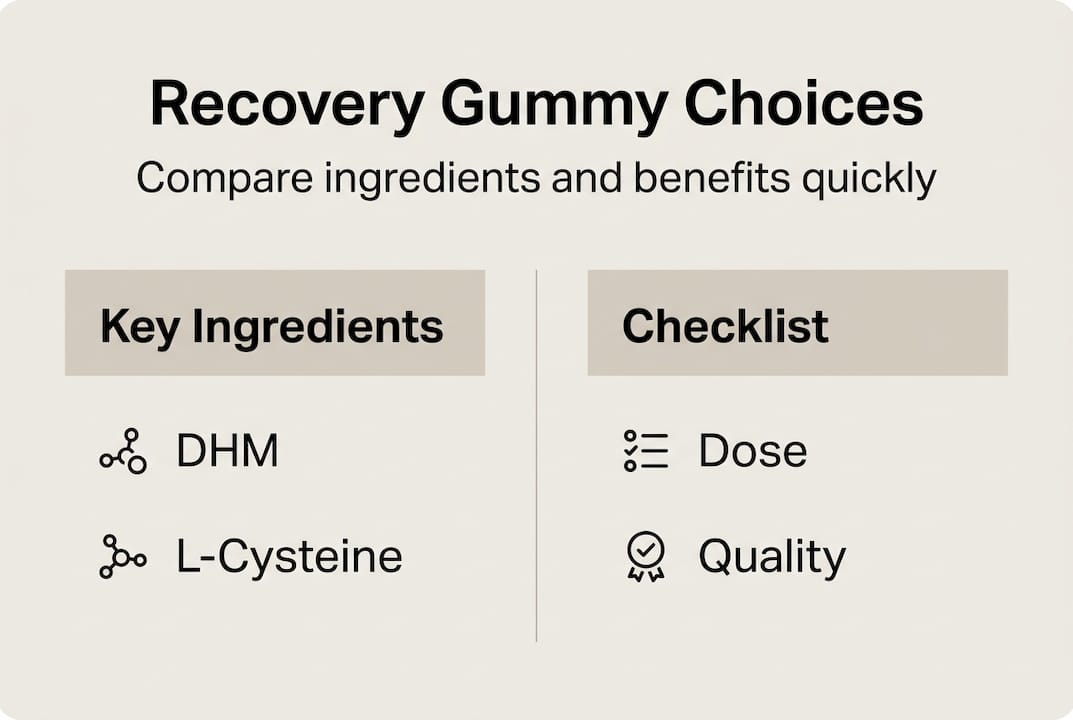
Here’s how the two approaches compare:
| Feature | Pure DHM gummy | Multi-ingredient blend (e.g., CHEERS!®) |
|---|---|---|
| DHM dose transparency | Varies | ✓ Clearly stated |
| Supporting ingredients | None | ✓ L-Cysteine, Milk Thistle, B-Vitamins |
| Format quality | Basic | ✓ Bioavailable gummy form |
| Clean-label credentials | Varies | ✓ Vegan, non-GMO, gluten-free |
| Third-party testing | Rarely | ✓ Named laboratory COA |
Checklist point 4: clean-label credentials. Look for vegan, non-GMO, and gluten-free certifications. These signals indicate a brand that takes formulation seriously and caters to a wide range of dietary needs.
The top ingredients to prioritise in a multi-ingredient formula, ranked by evidence strength:
- L-Cysteine(450mg+): directly supports acetaldehyde breakdown
- Milk Thistle (Silymarin): well-researched for liver support and hepatoprotective effects
- B-Vitamins (B1, B6, B12): replenish nutrients depleted by alcohol metabolism
- Electrolytes: restore hydration balance
- Prickly Pear extract: anti-inflammatory and antioxidant properties
- Ginger extract: reduces nausea and supports digestion
For additional context, see our guide to NAC and liver function.
How to balance price, brand reputation, and real results
Even the best formula loses its appeal if the price is unsustainable or the brand has a questionable track record.
Checklist point 5: third-party testing by a named laboratory. This deserves repeating because it’s the final filter. Budget brands often skip this step entirely. Premium brands use it as a selling point. CHEERS!®, for instance, has appeared on Shark Tank and maintains a strong independent rating profile, which adds a layer of accountability that anonymous brands simply don’t have.
On pricing, pure DHM gummies from brands like Nutricost run roughly £0.15 to £0.55 per serving, making them accessible for everyday use. Multi-ingredient blends such as CHEERS!® Restore sit closer to £2.30 per serving, while options like UNDO and Flyby fall in between. The higher price of a multi-ingredient product is justified when the formula is genuinely comprehensive and third-party verified.
Here’s what to look for when evaluating brand reputation:
- GMP-certified manufacturing facilities
- Consistent positive reviews across independent platforms
- Transparency about ingredient sourcing
- Awards or media recognition from credible outlets
- A clear returns or satisfaction policy
Pro Tip: Don’t rely solely on the brand’s own website for reviews. Cross-reference on third-party retailers and independent health forums. Real users rarely hold back.
Price is not always a reliable proxy for quality. Some mid-range products outperform expensive ones simply because they’ve invested in formulation rather than marketing. Equally, some budget options are genuinely well-made for users with straightforward needs. The CHEERS gummies overview and the BioEssentials DHM review offer more product-specific context.
The real secret: tailoring DHM gummies to your lifestyle
Most buyer’s guides stop at ingredient lists and price comparisons. But the most important variable is one that no label can quantify: you.
Your drinking habits, liver sensitivity, dietary preferences, and budget all shape which product will actually work for you. Someone who drinks socially once a week has different needs from someone who attends regular corporate events or travels frequently across time zones. A vegan athlete needs a different formula than someone primarily concerned with cost.
This is why some people try a highly rated, well-formulated product and feel little benefit. It’s not always the product’s fault. It may simply not match their physiology or their pattern of use. The BioEssentials DHM approach acknowledges this by encouraging users to start with a baseline and adjust. That’s genuinely good advice. Begin with a straightforward, well-dosed product. Notice how your body responds. Then layer in additional support, whether that’s higher L-Cysteine, added electrolytes, or a liver-specific formula, based on what you actually experience. Chasing the most expensive blend from day one is rarely the most intelligent path.
Explore science-backed recovery with BioEssentials
You now have a clear, five-point framework for choosing a recovery gummy that genuinely delivers: DHM dose transparency, synergistic supporting ingredients, real gummy format quality, clean-label credentials, and third-party testing by a named laboratory. That’s not a small ask, but it’s the standard your body deserves.
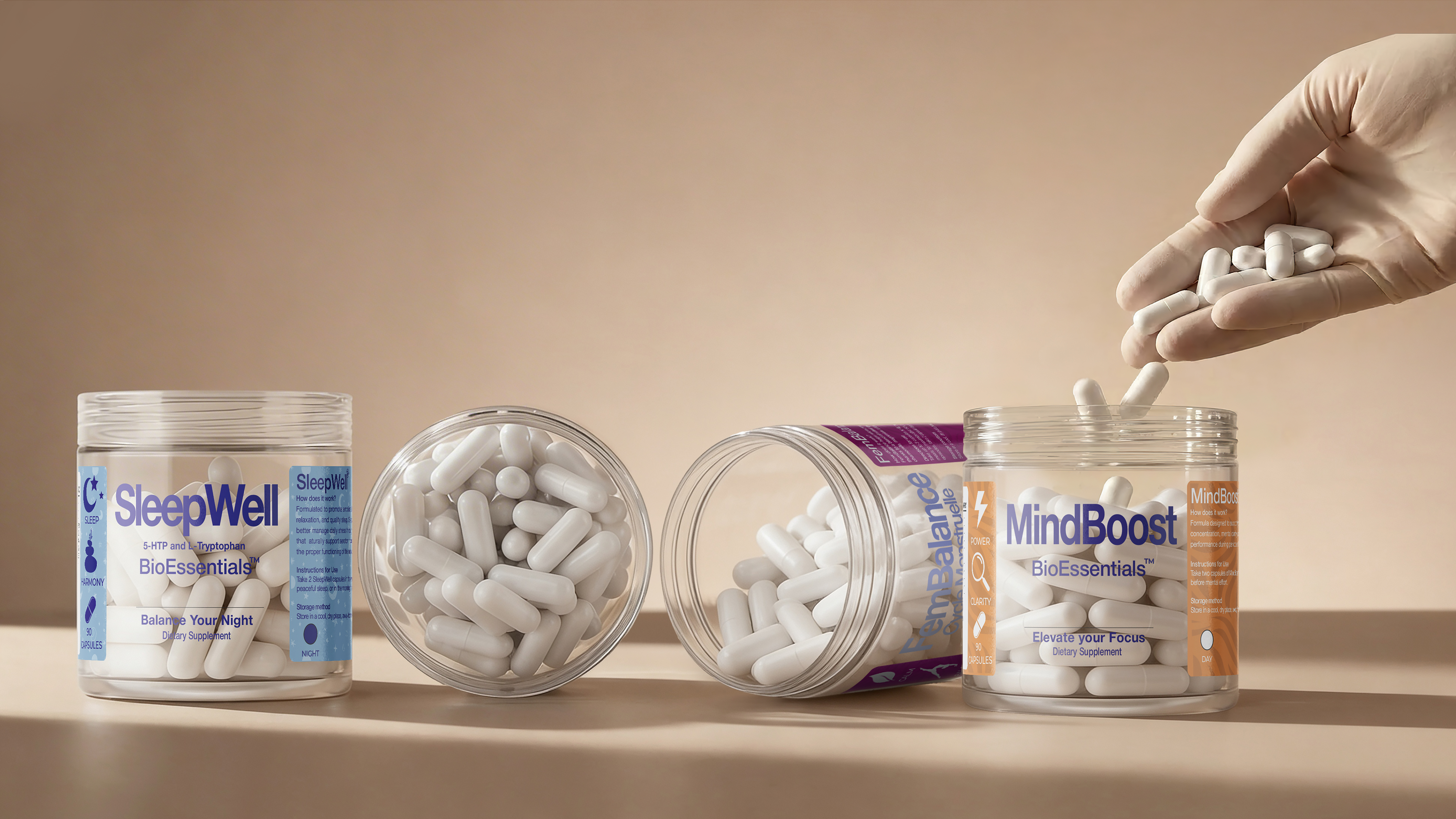
BioEssentials offers recovery formulas with disclosed ingredients and label directions. Whether you prefer a DHM recovery gummy for a convenient routine or a capsule-based liver-support formula, compare the complete serving, directions and ingredient disclosures before choosing.
Frequently asked questions
Is DHM safe for regular use in recovery gummies?
DHM is generally well-tolerated, and while preclinical data looks promising, human trials remain limited; choose trusted, certified brands and consult your doctor if you have any underlying health conditions.
What DHM dosage should I look for in a recovery gummy?
Most adults benefit from 300 to 600mg per serving, while heavier drinkers may need up to 1,000mg; always check that the dose is clearly listed on the label rather than hidden in a proprietary blend.
Do I need other ingredients besides DHM for best results?
Yes, pairing DHM with L-Cysteine, Milk Thistle, B-Vitamins, and electrolytes addresses recovery from multiple angles and tends to produce noticeably better outcomes than DHM alone.
How do I verify quality and safety in a recovery gummy?
Look for third-party lab testing with a named laboratory, a published certificate of analysis, and GMP certification; these three signals together are the strongest indicators of a trustworthy product.
Recommended
- Multi-pathway liver support: the new standard — BioEssentials
- How to choose the right magnesium supplement: the 5-form buyer's guide — BioEssentials
- How to choose a hair supplement: 5 criteria beyond biotin — BioEssentials
- Sleep supplements: why the best go beyond melatonin — BioEssentials
- How to stack magnesium: 5 BioEssentials formulas explained — BioEssentials
Our research and formulas have been recognized by leading media outlets such as Marie Claire.
Scientific References
- Clinical evidence on Dihydromyricetin efficacy and safety (PubMed)
- Mechanisms of action and bioavailability of Dihydromyricetin (PMC)
- Evidence-based review: Dihydromyricetin supplementation outcomes (PubMed)
These statements have not been evaluated by the Food and Drug Administration. BioEssentials products are food supplements intended to support general wellness and daily nutritional needs. They are not intended to diagnose, treat, cure, or prevent any disease. Always consult a healthcare professional before starting any new supplement if you are pregnant, breastfeeding, taking medication, or managing a health condition.


